Is home staging worth it? It can be, particularly when an empty or poorly presented property leaves buyers struggling to understand the space. The investment makes most sense when staging addresses a specific sales problem and the cost is proportionate to the property, your budget and the financial consequences of it remaining unsold.
But putting furniture in a house doesn’t automatically make it a good investment.
There. Probably not what you expected a home stager to say!
When it comes to selling a home, buyers arrive with practical questions. Can we afford it? Is the location right? Will our furniture fit?
But there’s another question running alongside all of that:
Can I see myself living here?
That’s where home staging comes in. Not to distract people from the property, but to help them understand it, connect with it and see how it could work for them.
So, let’s look at what you’re actually paying for, why it can make a difference, when your money might be better spent elsewhere and decide if home staging is worth it or not.
In this article
What is home staging?
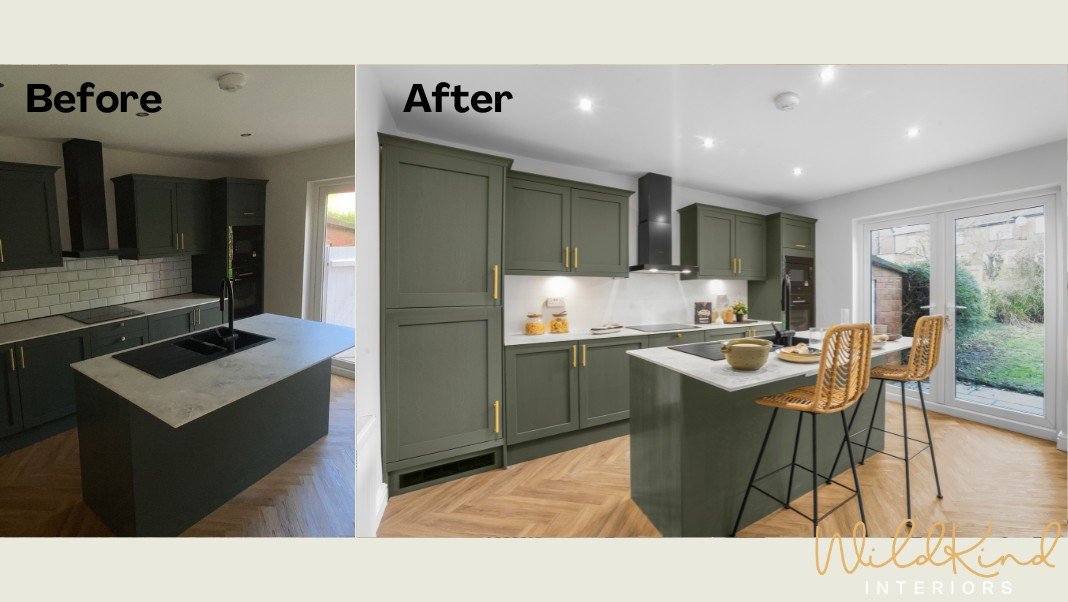
Home staging is the process of furnishing and styling a property specifically for sale. It uses furniture, lighting, artwork and accessories to demonstrate the space and appeal to its likely buyer.
Unlike designing someone’s permanent home, staging isn’t about the current owner’s favourite colours or how they prefer to arrange the furniture.
It’s about the person you want to buy it.
At WildKind, our property staging service uses rented furniture and accessories. We plan the scheme, install and style it, then remove the contents at the agreed point. You don’t have to buy a houseful of furniture or work out where to store it afterwards.wildkindinteriors.co
But the furniture is only part of what you’re commissioning.
The thinking behind it matters just as much: who the property is for, what buyers need to understand and how each room should support that.
Why does home staging work?
The most useful way to think about staging is that it gives buyers less to work out.
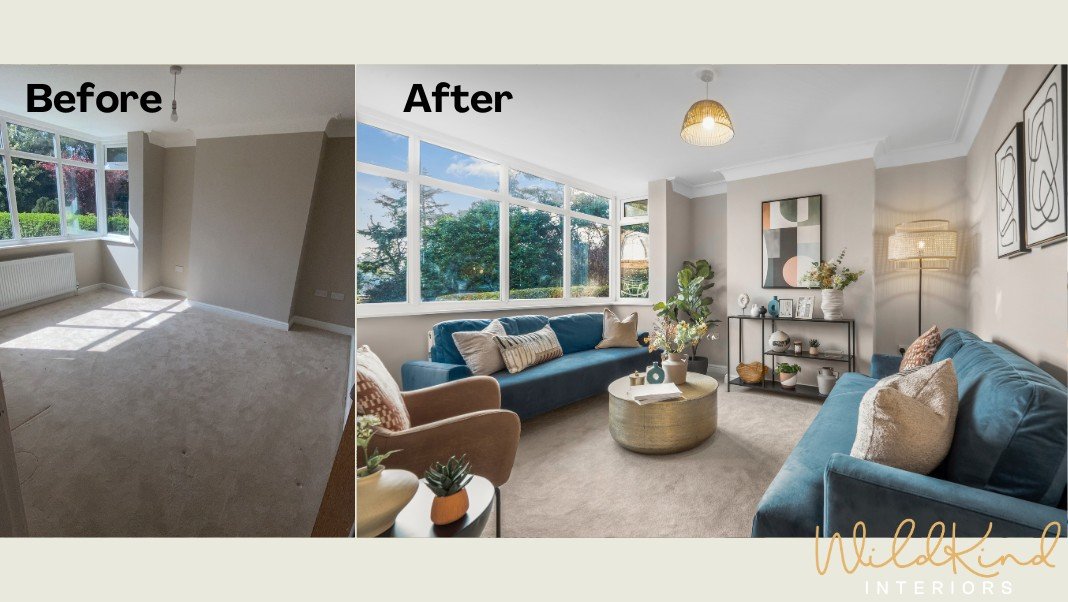
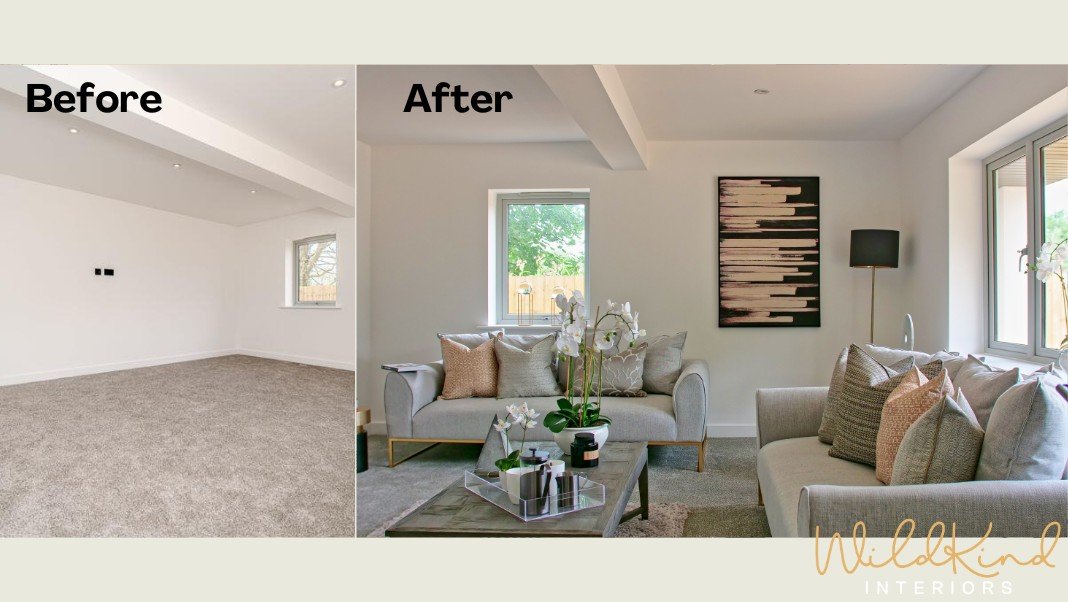
An empty room shows walls, windows and flooring. A thoughtfully furnished room can show where someone would eat, relax, work and put their belongings.
That’s a rather different sales conversation.
Your original article explored four reasons behind this. They’re still relevant, but they need to connect to real buying decisions – not just sound impressive.
1. It helps buyers visualise living there
You might look at an empty living room and immediately see the sofa arrangement, dining table and route out to the garden.
You’ve probably been thinking about the property for months.
Your buyer hasn’t.
They may be wondering whether their sofa will fit, whether a dining table would block the doors or whether the room is actually smaller than it looked online.
Staging lets you demonstrate an answer.
In the US National Association of REALTORS’ 2025 Profile of Home Staging, 83% of buyers’ agents said staging made it easier for buyers to visualise a property as a future home. This was a survey of agents’ views, not a controlled study of UK sales, so it doesn’t establish what staging will do to your sale price or timescale. But it does support the importance of helping buyers picture the home.nar
The practical point? Don’t make people do all the imagining themselves.
2. It creates a more considered first impression
A property doesn’t need to be everyone’s dream home. It does need to make sense to the people you’re trying to attract.
That starts with what they see in the listing and continues when they walk through the door.
A cramped furniture arrangement, an empty room with no obvious purpose or someone else’s possessions covering every surface can all distract from what you’re selling.
Thoughtful staging gives you control over that presentation.
The aim isn’t to make the place look untouched by human life. We’re selling a home, not a furniture warehouse.
It’s to create something welcoming, coherent and believable, so buyers can concentrate on the property rather than mentally rearranging it.
3. It answers practical questions through the layout
Put simply: don’t make the property unnecessarily hard to understand. Humans don’t like buying decisions to be difficult so help them!
Can a proper dining table fit? Is there room to walk around the bed? Can someone work from home without setting up their laptop on the kitchen hob?
A sensible furniture plan can answer those questions without the estate agent having to explain everything.
But the word “sensible” matters.
A tiny sofa and miniature dining table might leave more floor visible. They don’t necessarily demonstrate that the room works for everyday life.
The layout needs to stand up to a viewing, not just a wide-angle photograph.
4. It shows a lifestyle buyers can believe in
A peaceful bedroom. A comfortable place to read. A dining space that suggests friends coming over.
These details give buyers something to respond to beyond room dimensions.
That’s the aspirational part of staging.
But aspiration needs to belong to the property and the buyer. There’s not much point creating a glamorous entertaining space if your likely purchaser is more concerned about where the grandchildren will sleep.
We explore that balance in our guide to designing a showhome around the buyer, including why an interesting room isn’t necessarily a useful one.
When is home staging worth it?
Home staging is worth considering when presentation is preventing buyers from appreciating a property that otherwise meets their needs.
Here are the situations where there’s a clear reason to assess it.
The property is empty
An empty property gives you a blank canvas, but it also leaves the buyer to supply all the context.
This can be particularly relevant to open-plan spaces, compact bedrooms and rooms whose proportions are difficult to judge.
The question isn’t simply, “Would furniture make it look nicer?”
It’s, “What would furnishing this help buyers understand?”
That might be the difference between a living space that appears awkward and one with a convincing place to sit, eat and move around.
Buyers keep raising the same layout questions
Listen to viewing feedback.
If several people ask whether a dining table will fit, whether a bedroom can accommodate storage or what a particular room is for, you have something specific to investigate.
Check the dimensions first. If the proposed use genuinely works, staging can demonstrate it.
If it doesn’t, a nicer cushion won’t solve the problem, Sorry to say!
The presentation doesn’t match the asking price
Look at the property through the eyes of someone comparing it with other homes in the same price bracket.
Does the presentation help them understand the specification and space? Or are the photographs dominated by empty corners, unsuitable furniture or unfinished details?
That doesn’t mean spending lavishly on every room.
It means making sure the way you present the property supports the product you’re asking someone to buy.
You’re selling completed development stock
For developers and investors, staging is worth assessing alongside the cost of holding an unsold property.
Finance, insurance, utilities and other ongoing costs need to sit in the same conversation as the staging quote.
That doesn’t prove staging will shorten the sales period. It gives you a sensible basis for deciding what an improvement in sales performance would need to achieve.
A completed plot isn’t earning its keep simply because everyone agrees the kitchen looks lovely.
When might staging not be the priority?
Staging isn’t a substitute for getting the fundamentals right.
Before commissioning it, check whether presentation is actually the problem.
The asking price needs reviewing
If a property is priced beyond what comparable homes and current buyer feedback support, staging doesn’t remove that issue.
Ask your agent to explain the pricing evidence and how your property compares with its real competition.
Not just what you hoped it would achieve.
Repairs or unfinished work are putting buyers off
Visible damage, incomplete work and maintenance concerns need their own plan.
Furniture shouldn’t be used to disguise defects. And styling a room before the necessary work is finished may simply create more work later.
Get the property ready, then present it properly.
The existing furniture already does the job
An occupied home almost definitely won’t need a full rental installation.
It might benefit more from removing a few pieces, improving the layout, decluttering or refreshing the styling.
The right recommendation should reflect what the property needs, not how much furniture someone can deliver.
The likely buyer is purchasing a renovation project
If the main attraction is redevelopment potential, the existing interior may be less important than clear plans, access and accurate information about the building.
That doesn’t mean presentation is irrelevant. It means the intervention should suit the sale.
Sometimes a clean, cleared property and clear information are more useful than a fully dressed living room.
Is home staging worth it financially?
Don’t start with a sweeping claim that staging adds a fixed percentage to every property.
Start with your own numbers.
For anyone asking “is home staging worth it?”, the useful comparison is between the full cost of staging and the financial outcomes it would need to support.
Get the complete staging cost
Check the quote includes the scope you actually need:
The rooms being furnished and styled.
Delivery, installation and removal.
The initial rental period.
Any extension charges.
VAT.
Any additional photography or marketing costs.
WildKind’s published guide prices start from £2,000 + VAT for a one-bedroom apartment, with the final quote depending on the property and requirements. Our property staging costs guide explains the pricing and what to check when comparing quotes.
A headline price is useful. A clear total is more useful.
Compare it with realistic alternatives
Would you otherwise leave the property as it is? Change the photography? Review the asking price? Undertake repairs? Improve the agent’s marketing?
These aren’t always competing choices. You may need more than one.
For developers, also calculate the actual monthly cost of keeping the property unsold. For homeowners, consider the wider selling and moving budget. MoneyHelper’s guide to buying and selling costs is a useful reminder that staging sits alongside other expenses, including estate-agent and legal fees.
Use a break-even scenario (not a promise)
Here’s a hypothetical example…
Suppose the total staging and associated marketing spend is £4,000, and your verified holding costs are £2,000 a month.
A sale completing two months earlier would offset that spend through holding-cost savings alone.
That is a scenario to test, not a prediction that staging will deliver it.
Similarly, you can compare the quote with a possible price reduction. But don’t assume staging will prevent that reduction. If the asking price is wrong, the comparison doesn’t make the price right.
Agree what you’ll measure
Useful measures include:
Relevant enquiries and viewings.
Recurring objections in viewing feedback.
Viewing-to-offer or viewing-to-reservation conversion.
Offers relative to the asking price.
Time to an acceptable offer.
Ongoing costs and incentives.
Record any changes to price, photography and marketing at the same time.
Otherwise, if several things improve together, you won’t know what contributed to the result.
“Everyone loved the cushions” is nice feedback. It isn’t a return-on-investment calculation.
Which home staging mistakes undermine the investment?
The original article warned against too much greige, impractical layouts and forgetting the target buyer. All three still deserve a mention.
Forgetting who you’re selling to
A family home should answer different questions from a city apartment aimed at a professional couple.
Start with evidence from your agent and sales enquiries, then build the scheme around the likely buyer.
Your taste can have a day off.
Choosing furniture that doesn’t demonstrate real use
Too much furniture can make circulation awkward. Too little can leave buyers wondering whether the room functions at all.
Check dimensions, walking routes and access to doors and storage.
The goal is a convincing layout, not the greatest possible number of accessories per square metre.
Assuming neutral means colourless
A considered scheme doesn’t have to be wall-to-wall beige.
Colour, contrast and texture should work with the light, finishes and character of the property.
That’s a design decision, not a reason to follow every trend or give every room a different personality.
Getting photographs that don’t reflect the viewing
The photographs and the physical property need to tell the same story.
If buyers arrive expecting a generous living space and discover an impractical arrangement, the disappointment won’t help the sales conversation.
Plan photography after installation and styling, with the rooms presented as they will be for viewings.
Frequently asked questions
Is home staging worth it if I can style the property myself?
Yes. Cleaning, decluttering, removing unsuitable furniture and giving rooms a clear purpose are sensible starting points.
Professional help is worth considering when you need a complete furniture scheme, have difficult spaces to demonstrate or want someone to manage the installation. The right level of support depends on the property, not just whether you can style a shelf.
Do I need to stage every room?
Not necessarily but it depends upon the presentation of the rooms as they exist. Prioritise the rooms that explain the property and address buyers’ questions.
The living space and main bedroom may be important, but an awkward second bedroom or open-plan dining area could be the space that most needs demonstrating. Agree the scope around the property rather than choosing rooms automatically.
Is home staging the same as a showhome?
The terms overlap, but the service can differ.
WildKind’s rental staging service provides temporary furniture and styling for sale. A full showhome may involve a permanent, more extensively specified interior designed to support sales across a development. The right option depends on the scheme, budget and intended period of use.
How long does staging stay in the property?
That depends on the agreed hire period. WildKind’s costs guide currently gives prices for an eight-week staging period.
Check what happens if the sales process takes longer, including extension charges and when removal will be arranged. Don’t assume the initial price covers an unlimited period.
Want to work out whether staging makes sense for your property?
Send us the location, photographs or floor plan, your intended asking price and sales timeline.
We’ll discuss what the property needs to communicate, who you’re trying to attract and whether rental staging is an appropriate option.
Talk to WildKind about staging your property for sale.
By Louise Wynne, founder of WildKind Interiors. Louise has worked in property interiors since 2006 and is trained in applied colour and design psychology. WildKind works with developers, investors, housebuilders and homeowners across the UK.